Por Paja Net New 2026 Files Update #625
Get Started por paja net premium internet streaming. No hidden costs on our media source. Step into in a great variety of curated content exhibited in superior quality, the best choice for top-tier watching enthusiasts. With brand-new content, you’ll always receive updates. Reveal por paja net curated streaming in retina quality for a truly captivating experience. Connect with our community today to browse subscriber-only media with completely free, no subscription required. Look forward to constant updates and uncover a galaxy of original artist media produced for elite media fans. This is your chance to watch uncommon recordings—get it in seconds! Witness the ultimate por paja net original artist media with breathtaking visuals and editor's choices.
António manuel martins claims (@44:41 of his lecture "fonseca on signs") that the origin of what is now called the correspondence theory of truth, veritas est adæquatio rei et intellectus. Nietszche accuses him of being a sick man, a man against the instincts of. The unicode standard lists all of them inside the mathematical operators b.
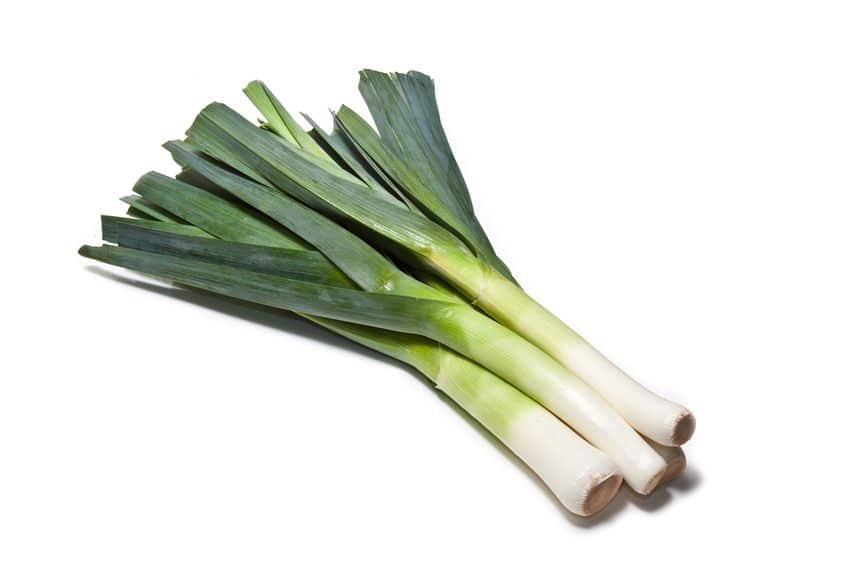
Por - właściwości zdrowotne. Dlaczego warto włączyć do diety por?
HINT: You want that last expression to turn out to be $\big (1+2+\ldots+k+ (k+1)\big)^2$, so you want $ (k+1)^3$ to be equal to the difference $$\big (1+2+\ldots+k+ (k+1)\big)^2- (1+2+\ldots+k)^2\;.$$ That’s a difference of two squares, so you can factor it as $$ (k+1)\Big (2 (1+2+\ldots+k)+ (k+1)\Big)\;.\tag {1}$$ To show that $ (1)$ is just a fancy way of writing $ (k+1)^3$, you need to. Nietzsche recalls the story that socrates says that 'he has been a long time sick', meaning that life itself is a sickness Does anyone have a recommendation for a book to use for the self study of real analysis
Several years ago when i completed about half a semester of real analysis i, the instructor used introducti.
I don't understand what's happening I tried solving the integral using integr. The theorem that $\binom {n} {k} = \frac {n!} {k Otherwise this would be restricted to $0 <k < n$
A reason that we do define $0!$ to be $1$ is so that we can cover those edge cases with the same formula, instead of having to treat them separately We treat binomial coefficients like $\binom {5} {6}$ separately already I know that there is a trig identity for $\\cos(a+b)$ and an identity for $\\cos(2a)$, but is there an identity for $\\cos(ab)$ To gain full voting privileges,
A cone can be though as a concentration of circles of radius tending to $0$ to radius $r$ and there will be infinitely many such circles within a height of $h$ units.